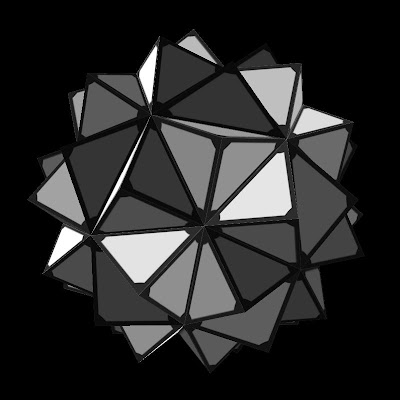
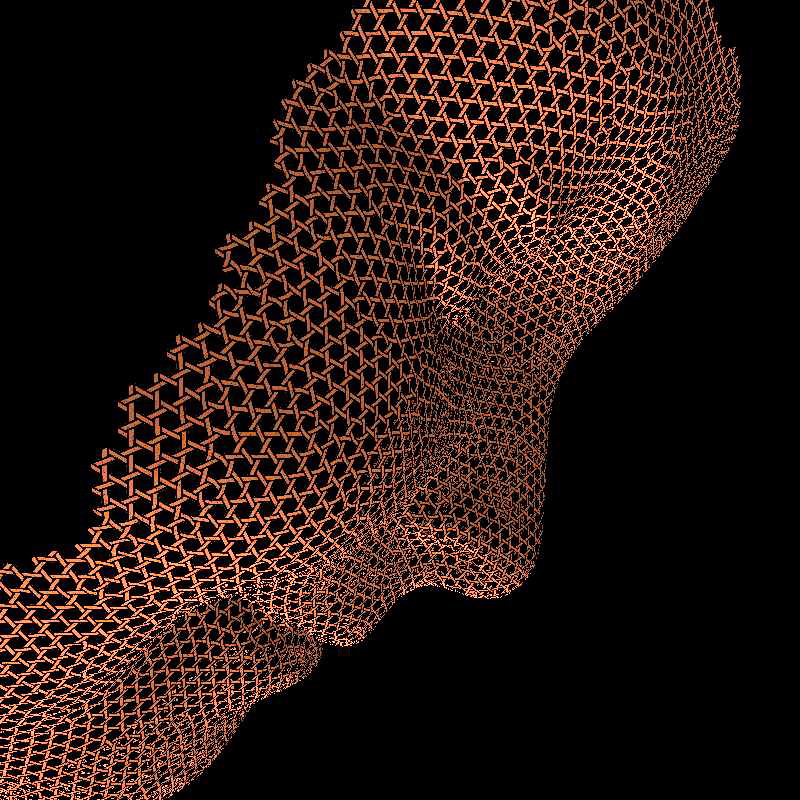
Showing posts sorted by relevance for query unit. Sort by date Show all posts

Friday, August 4, 2017

Why synthetic weaving?

A crossing in synthetic weaving. The continuous scaffold strand (orange) visits the entire fabric but makes none of the crossings. Short staples (purple and white) specialize in making the crossings.

The same synthetic weave crossing as seen from the 'wrong' side of the fabric showing the tag ends of the white staples.

Weaving is perhaps our most useful technique for constructing a fabric surface, but it can be unwieldy at large scale. How would you weave a building? If you've ever woven a basket, imagine manipulating a thicket of free ends some meters in length.

Unit weaving, Da Vinci style.
Unit weaving, IQ's style.
Unit weaving,Twogs style.


One solution is unit weaving (nexorades etc.) This is an idea that dates back to Leonardo Da Vinci. Unit weaving solves the problem of scale by weaving very short elements-- basically splices are placed everywhere. The structural weakness of the splices limits the practical application of this approach.

Pre-formed wire crochet.


Pre-formed wire crochet builds a surface from a continuous unspliced wire. The wire's path is loopy which makes it difficult to produce and maintain a precise surface geometry. One special advantage of pre-formed wire crochet is that information the crocheter needs in order to build the surface can be carried in the pre-bending of the wire.

Synthetic weaving.


Synthetic weaving is hybrid unit-weaving and pre-formed wire crochet that derives from mathematical insights into basket weaving, experience with unit weaving, and the scaffold-strand technique being used at Karolinska Institutet in Sweden to self-assemble nanoscale baskets from molecules of DNA.

I use synthetic in the sense of "put together." Even though a single long wire, the scaffold strand, constructs the entire surface (as in crochet) it fails to make any of the necessary weave crossings! That work is left to specialists: short helical unit weavers called staples. In some cases these staples can all be identical, interchangeable, and reuseable. The pre-bent scaffold strand carries complete geometric and working-order information for the weaving. While the scaffold strand does not participate in any of the crossings, it does contribute to the strength of the bond between the two helical strands that wrap around it.

Synthetic weaving is like unit weaving but with very strong splices where all the build information is in a pre-bent wire, and like pre-formed wire crochet but with the straight-line force transfer of weaving.

Friday, May 17, 2013

Options for 2-square Puck origami units

Options for a 2 square modular origami unit for Puck weaving.

The unit at the top of the figure is its own mirror image, thus only one type of unit is needed, but the splices cannot be kept internal. The other three designs need to work as left/right enantiomorphic pairs but splices can be hidden under other weavers.

Definition: Puck is an acronym for polyphase, unit-woven, corrugated kagome.

There are two ways weavers can be spliced. They can be shingled like books fallen-over on a shelf, or laid like two courses of bricks.

To hide splices:

Shingled:  the length of the shingle must be odd since the left edge of the shingle will show on one face of the weaving and the right edge on the other; the phase shift (the spacing between successive shingles) must be even so that the corresponding edge of the next shingle on the same face can be covered as well.

Laid: the length of the shingle must be even since both left and right edge show on the same face of the weaving; the phase shift between the two courses must be odd so that correspondig edges on the reverse face are covered by the weaving.

For example, the lower three unit designs, since they have even length, must rely on a laid configuration and an odd phase shift (1 unit is the only option) in order to hide the splice edges.

In the case where the splice edges coincide with square edges (e.g., the upper design), we must settle for having the splice edges strapped-down rather than hidden. In this case, the splice must be single-edged (i.e. a shingled pattern, not a laid pattern) and—just as required above—the phase shift must be even. Here the length will also be even since half a square is gained at each end by settling for an edge that is merely strapped-down rather than hidden. The smallest such design is a four-square weaver with a two-square phase shift.

Monday, November 10, 2014

The teleological problem in polyphase unit weaving


Though it seems desirable to use longer unit weavers in the interest of fabric strength, a difficulty arises: the entire work must be predesigned in order to know the correct placement (orientation and phase) of new crossing pieces as they are encountered in the work. (Recall that the entire basket could be a an alternating knot, in that case the orientation and phase of every unit would have been fixed by the first crossing.)

To avoid this troublesome rigidity in the weaving process it is necessary to use non-directional unit weavers ( "S"- and "Z"-shaped, not "W"-shaped) and non-directional layering (i.e., brick-laid, not shingled.)

Also, there must be a splice everywhere it is possible to have a splice, otherwise the question of how to phase the next crossing weaver would arise.

Due to these condiderations, the only possible not-teleological unit weavers are "Z"- and "S"-units two triangles in length. Placing "Z"-units on one face and "S"-units on the other, covers all the splices on both faces.

Thursday, June 20, 2013

1.5 unit weavers per vertex

Only unit weavers measuring an even number, N, squares in length are permissible if we wish to hide the splices on both of the faces. If the phase shift used in building up the composite weaver is 2 squares, the thickness of each composite weaver is N/2 plies. But, since the weavers cross two-by-two in what is locally a tabby weave, the basket itself will be N plies thick.

Each vertex in the trivalent primal map "owns" one triangle in the triangle-faced dual map. In turn, this triangle "owns" three half-squares of tabby weave. Since these three half-squares are N plies thick, each triangle (and in turn each primal vertex) "owns" 3*N/2 squares of unit weaver. Since the unit weavers themselves are N squares long, the consumption of unit weavers is 1.5 per primal vertex, regardless of length, provided the phase shift is 2.

Thursday, June 13, 2013

Closing moves in PUCK weaving

The final weaving moves that are needed to close up a woven surface do not arise in most basket making for the simple reason that most baskets are not closed surfaces. Nonetheless, an ability to patch up a hole is indispensable in any fabric technique used to make topological spheres and all higher genus surfaces.

At the local level, PUCK weaving is simply tabby weave: weavers cross one another at 90 degree angles, over-one-and-under-one. Each crossing is a square of double-thickness fabric. In order for both ends of a PUCK weaver to lie buried inside the weaving, the weaver must measure an even number of squares in length. Since the zig-zagging, diagonal folds follow alternate diagonals of successive squares, a weaving unit that is an even number of squares in length will have mirror symmetry (an odd length would yield 180-degree rotational symmetry.) For example, the diagonal folds of a 4-square PUCK weaver trace out a mirror-symmetrical "W" or "M" depending on how you look at it.

For simplicity, we'll standardize the assumption that we are weaving a points-out basket from its outside. That orientation makes the diagonal folds appear as "valley folds" to use origami terminology. Note that if the four valley folds in 4-square PUCK weaver look like an "M" to you, a 180 degree rotation in the plane will make them look like "W". Again for simplicity, we'll standardize on the "W" point of view. 

When 4-square PUCK weavers are shingled together (inevitably with a 2-square phase shift) to compose a longer, multi-ply weaver—depending how they are shingled—we will see shingle edges at either the leading or trailing stroke of the "W". (Recall that we are always viewing weavers from the points-out side.) Expecting that only complexity canl be gained by permitting different composite weavers to be shingled in different ways, we further standardize on leading-stroke shingling.

Once we have formed a composite weaver by shingling multiple W's together, notice that we now have two kinds of "points-out" points: points that appear to be at the bottom in the W-orientation, call these w-points, and points that appear to be at the bottom in the M-orientation, call these m-points. The two kinds of points alternate along the length of a composite weaver—and they are physically different. At a w-point we find the middle of a unit-weaver coinciding with two cut ends. At an m-point we find we find the overlap of outboard portions of two unit-weavers, and no cut ends. 

In terms of individual unit weavers, each 4-square unit weaver has one w-point and two m-points. 

These two physically different types of points complicate the situation in closing the last stitches of a woven surface. We may ultimately find ourselves finishing at any of four kinds of point. Ignoring the possible chiral variations, we may find ourselves  finishing at a point that is mmm, mmw, mww, or www.

I am guessing that the mmm closing is easiest. In a korgome basket based on a chess-colorable triangulation, the composite weavers can be phased in a coherent way that makes every alternate point www or mmm, giving a 50/50 chance that any given point is mmm. But chess-colorable triangulations are shape limiting. In the general, non-chess-colorable case, only one eighth of the points will be mmm. However, if we know which point we will be finishing at, we can teleologically orient the three composite weavers that will cross at the finishing point to make that point mmm. 


Wednesday, December 3, 2014

Unit-weaving voxel surfaces

A unit-weaving pattern for the enveloping surface of a union of voxels. The weavers are four squares long. The black squares are holes in the fabric. The dashed lines are voxel boundaries. (Alternatively, the corners of the voxels could be centered on the holes.) In either case, if the weave pattern is made up of unit squares, the modulus of the votels is the square root of 5. 

The over-and-under of weaving can play tricks on the imagination—for example, when weaving a non-orientable surface like a Klein bottle. The reliable way to picture an over-and-under weave is as a chess-coloring of a four-valent map. (A map is a generalization of a polyhedron we are no longer concerned with measurements of angle and distance, i.e., geometry, but only with the way the polygonal faces are mated with each other and the way the surface connects to itself; i.e., we are only concerned with topology.)

Starting with any map we can convert it to a chess-colorable, 4-valent map via the map operation medial. In this way we can discover a way to weave any tessellation of any surface, orientable or non-orientable. That's the universal method.

For special maps there may be alternative ways to do the weaving. For example, if the original map is already 4-valent and chess-colorable there is no need to take its medial, the original map is directly weavable. The dual of a 4-valent, chess-colorable map is a quad-faced, bipartite map. Thus, if we are given a quad-faced, bipartite map we do not need to take its medial—we can simply take its dual and weave that. As an example of the difference the choice makes, consider the map of a cube: it has 6 quad faces and its vertices can be colored black and white in such a way that no two adjacent vertices have the same color (in other words, the map of a cube is bipartite.) If we weave the map of a cube using the universal method we will end up with one weave crossing for every edge in the original map: a total of 12 weave crossings. If we use the special method (i.e., we directly weave the map's dual) we will end up with a crossing for each face in the original map: a total of 6 crossings. The special method yields a coarser and simpler way to weave the same surface.

A commonly encountered surface that is quad-faced and bipartite is the envelope of any union of voxels. Clearly such a surface is quad-faced. It is also bipartite because the entire 3-D, Cartesian mesh of unit squares is can be vertex 2-colored such that no two adjacent vertices have the same color. When we sculpt a union of voxels out of this space, the vertices can keep their colors. Left in view is a surface that is clearly bipartite.


Alternate ways to unit-weave a voxel whose modulus is the square root of five times the weaver width.


Thursday, May 16, 2013

Corrugated kagome polyphase unit weaver

The image shows a paper model of a 3-phase corrugated unit weaver. Identical units overlap shingle-like to form a weaver that is everywhere 3 plies thick. Since every underlying triangle in (non-unit) corrugated kagome is overlaid by 3 weavers each covering 2/3 of the triangle, such a basket is 2 plies thick. Realized with 3-phase unit weavers, the same basket will be 6 plies thick.

Friday, May 17, 2013

Options for 4-square puck modules for unit origami

Since 4-square units are an even number of squares in length, shingling is out for hidden edges. The splicing must be brick-laid with an odd phase shift (1 is the only option since 3 is really the same thing.) Enantiomorphs are again required.

The good news is for the case with strapped-down edges. This 4-square unit can be simply shingled.


A 4-square puck module for unit origami.

Wednesday, June 26, 2013

Puck weaving from undip words

When puck weaving from an undip word, we build out a triangulated surface one triangle at a time, one triangle per undip letter. Half of those letters are "open", the other half are "close" letters. 

Each finished triangle is 4 plies thick. Each 4-square puck weaver effectively covers 4 * 2/3 triangles with a single-ply thickness. So, on average, we need to add 1.5 unit weavers per letter. (That checks since there is one undip letter per vertex in the primal map, and we already knew that we need 1.5 unit weavers per vertex.)

A possible weaving strategy is to add 2 puck weavers at each "open" letter, and 1 at each "close" letter. As an exception, add 3 puck weavers at the first letter (which is invariably "open") and 0 at the last (which is invariably "close."). This strategy always yields  1.5 puck weavers per letter.

4-square puck weavers extend pretty far. One placed centrally extends half-way through it's neighbor's neighbor; one placed "outboard" extends (on its longer side) half-way through its neighbor's neighbor's neighbor. These long extensions can make puck weaving visually complex compared to simple unit weaving, so it is desirable to have definite placement rules to follow. 

Bipartite maps are the simplest to weave. If we always shingle composite weavers the same way (the standard way is with the leading strokes of the w's in front,) then every all-central vertex will be identical, and every all-outboard vertex will be identical. If the primal map is bipartite, then it is possible to have just these two types of vertex in the basket. Such a solution is found simply by making these two types alternate around any cycle, for example the Hamilton cycle encoded by an undip word. This alternation in types will occur automatically along the length of any composite weaver, we only need to be careful when placing crossing pucks to avoid creating a hybrid vertices.

If we would like an undip word for a bipartite basket to terminate at an all-outboard vertex, we simply need to start it at an all-central vertex. 

Each woven peak can be characterized as "upstairs" or "downstairs" by circling around the peak in a counterclockwise direction and noticing the "steps" where each weaver underlies or overlies the next. This determination can be made on either side of the fabric and gives the same result. When composite weavers are shingled the standard way (with the leading stroke of the w in front) only "downstairs" peaks are correctly woven. Weaving correctly automatically assures that the flaps of the pucks are hidden on both faces. 


Wednesday, November 5, 2014

Weaving bricks

A puck weaver of length 2 and corrugation frequency 3.
There is a "teleological" problem in polyphase unit weaving when the composite, polyphase weavers are shingled. Shingling effectively assigns to each composite weaver an orientation, i.e., the direction that the units "lean."As new crossing weavers are encountered in building up the basket surface, the entire basket would need to have been designed in advance in order to know which orientation to start them in.

Brick-laid unit weavers do not have an orientation, and thus escape this difficulty. Since all weavers form closed loops of even length, identical puck "bricks" that form these loops by being laid end-to-end  must have even length. In fact for the greatest versatility of shape they must have length two.

That leaves very little overlap for bricks in adjacent courses to engage one another, so higher frequency corrugation is useful for greater stiffness and frictional engagement between courses. The little puck "brick" pictured above begins to gain some inevitability.

In a single-layer course of these bricks laid end-to-end, spliced squares alternate with un-spliced squares. The un-spliced squares are the ones that the over-and-under pattern of kagome weaving will expose on that face. On the other face, the spliced squares of this course will be covered by the un-spliced squares of the other course.

Thursday, June 20, 2013

All-central = www. All-outboard = mmm.

A 4-square puck weaver in standard position with points labelled.
A more self-explanatory terminology for vertices that are mmm or www, is all-outboard and all-central.

We wish to end our weaving at an all-outboard vertex (formerly mmm) so we can tuck it closed like the flaps of a box.


A completed all-outboard (formerly mmm) vertex in puck weaving.

A completed all-central (formerly www) vertex in puck weaving.

When finished, an all-outboard vertex naturally looks tidy because no unit weavers come to an end at its folds. An all-central vertex will look messy if the ends of unit weavers are visible, as in the photo above.

Friday, May 17, 2013

Options for 3-square puck modules for unit origami

Options for puck origami units of three squares length.
None of these units require enantiomorphs when the phase shift is two squares. When shingled, the splice edges of the upper three designs can be hidden. The lower design, which has splice edges coinciding with the edges of the squares, cannot have all its splice edges strapped-down because the length of the unit is odd (see previous post.)

Tuesday, June 20, 2023

Coding unit weaving in paper cutting

A digital cutting machine such as Cricut is a practical way to make unit-weavers (such as twogs) in all different lengths, allowing more customized shapes to be woven. There is then the problem of how to keep the different lengths sorted and properly sequenced in the weaving process. I find that narrow paper bridges (the J-shapes) in the model above, can keep twogs sequenced in a way that also codes the weaving moves. For example, reading the model above from top to bottom, the pattern is natural seen as open-left, open-right, close-left, close-right, (knowing that the last move closes up the weaving, 'close-right' is deduced as the only possibility) a weaving pattern that builds a tetrahedron. In fact, the short paper bridges would hardly allow any other pattern to be woven.

Sunday, June 23, 2013

Oriented weavers: teleological weaving

Kagome weaving. In polyphase unit-weaving each of these weavers would have a specified direction (orientation.)

Polyphase weavers have a structure similar to fallen-over dominoes. This structure gives the composite weaver a definite directionality or orientation.

Weaver paths can wander all over a basket, sometimes crossing over themselves. In some cases a single weaver constitutes the whole basket.

The weaving elements used in traditional basket making have an orientation—the direction that the plant material, say rattan or bamboo, grew—but it is not usually a concern in weaving. A composite puck weaver has an orientation too.  The structure of a composite weaver is like a row of dominoes that has fallen over. Just as we can tell in which direction the dominoes fell, the structure of a composite weaver has a definite orientation. Either orientation will work fine in the weaving, so orientation would not be a concern if we were to make the whole weaver in one step. The problem is that we will be building small portions of weaver at a time, and generally not knowing which weaver we are working on. The only solution is to have complete foreknowledge of the basket being woven so that the orientation of each unit weaver being placed can be specified.

When weaving by undip code, we add one triangle at a time to the completed work. The triangle depicts three segments of weaver. The orientation of two segments are already fixed because  they also appeared in the preceding triangle. If the letter for the triangle is a close letter, then the orientation of the third segment is fixed by its appearance in the older triangle that is being closed to. Thus the orientation of the weavers in puck weaving requires the addition of one bit of information to each open letter in an undip code.

Monday, June 10, 2013

Cube corner pyramids

A manufactured surface decorated with cube corner pyramids.

Define a cube corner pyramid as a pyramid specified by taking one corner of a cube as the pyramid's apex, and, as the pyramid's base, the equilateral triangle formed by face diagonals of the three faces of the cube adjacent to the chosen corner.

This diagram (far right) clarifies the geometry:

A cube corner pyramid (far right.) Image quoted from Wolfram MathWorld.

Plugging in the formula for the volume of a pyramid, V = A* h/3, we can calculate from the numbers given in the Wolfram chart for a unit cube:

1/6 = h * sqrt(3) / (2 * 3),

so the height, h = 1/sqrt(3).

Since the sides of the equilateral triangle that is the base of the pyramid measure sqrt(2), the ratio of the height of the pyramid to one of the sides of its base is 1/sqrt(6) = 0.40825...

If a surface mesh is composed of equilateral triangles, then decorating the mesh with cube corner pyramids gives us a surface that we can weave with straight, constant-width weavers that always cross each other at right angles, over-one/under-one. This sort of weaving can be seen a tabby weave or kagome weave depending on how local your perspective is. I think it is easier to see it as corrugated kagome.

Whether to point a given pyramid inward or outward can be decided independently for each equilateral triangle in the mesh. Here are some simulations of corrugated kagome surfaces, mostly with points out. These surfaces are the same as those that can be assembled from Mitsunobu Sonobe's unit origami module.


An icosahedron decorated with cube corner pyramids.

A tetrahelix decorated with cube corner pyramids.

In the following two images the mesh triangles are not equilateral, so the weavers will not be straight or constant-width. One shows a mesh with points out, the other the same mesh with points in.

A non-equilateral decoration decorated with cube corner pyramids. (The resulting weavers are not straight or constant width.) Model courtesy INRIA.

The same model decorated with points-in cube corner pyramids.

A origami project using sonobe units by lonely-soldier.

Thursday, June 20, 2013

Frequency-1 puck weaving of the tetrahedron

A tetrahedron in frequency-1 puck weaving. The forward corner is an all-outboard vertex. (The tetrahedron is self-dual. Putting cube-corner pyramids on the triangular faces of the dual tetrahedron makes a cube.)

In frequency-1 weaving of the tetrahedron, the diagonal corrugation folds open out to 180 degrees, effectively disappearing. We are left with a set of three composite weavers essentially having only the square folds. These form a cube-like surface (actually a tetrahedron decorated with cube corner pyramids) from three orthogonal, belt-like paths. Two unit weavers overlap to form each belt. The total number of unit weavers used is 4*1.5 = 6.

Within each composite belt, body diagonals of the "cube" connect points of the same type. Therefore, if we start at an all-outboard point we can finish at the body-diagonally opposite corner of the "cube" at another all-outboard point.

Ending up at an mmm vertex

The points-out side of a frequency-1 korgome weaving. The "points" correspond to the vertices of the primal, trivalent map.

We'll take the trivalent map as the primal description of a korgome basket because, for example, we probably have better intuition about the cube (which is trivalent) than about its dual the octahedron, and about the dodecahedron (which is trivalent) than about its dual the icosahedron.

Taking that viewpoint, the "points" in korgome weaving correspond to vertices of the primal trivalent map, and the triangles (so evident from the points-in side of frequency-1 korgome shown below) are faces of the dual triangle-faced map.

The points-in side of a frequency-1 korgome weaving. The evident triangles correspond to faces of the triangle-faced, dual map.

The path of a korgome weaver corresponds to a zig-zag (a.k.a. a left-right path or Petrie polygon) in the primal, a triangle strip in the dual, and a central circuit in the medial of either primal or dual since Me(M) = Me(M*).

The complete network of folds in frequency-0 korgome is the radial of either the primal or the dual since Ra(M) = Ra(M*). However, frequency-0 korgome is only possible if the primal map is bipartite.

(An abstract graph is bipartite if and only if its vertices can be colored "black" or "white" such that no two vertices with the same color are adjacent. If such a vertex 2-coloring of the graph exists, it is unique up to color rotation and is easily discovered by simply starting coloring.)

The complete network of folds in frequency-1 korgome is ko of the trivalent primal, Ko(M), and kis of the triangle-faced dual, Ki(M*). Frequency-1 korgome is possible for any trivalent primal map. 

Every polyphase weaver which is composed of unit weavers of even length has a w-side and an m-side (assuming, as always, we are observing the points-out face of the fabric.) Backtracking from the vertex we wish to finish weaving at, we can make that vertex mmm simply by correctly orienting its three polyphase weavers. In general, this leads to complicated constraints on the construction sequence since we must correctly orient three polyphase weavers wherever each is first encountered in the weaving.

The situation is much simpler if the trivalent primal is bipartite. Then we can start with a www vertex and sequentially add unit weavers subject to the rule that every vertex must be either www or mmm. If the primal is indeed bipartite, all will go well. At the end we will either find ourselves at an mmm vertex or right next door to one.
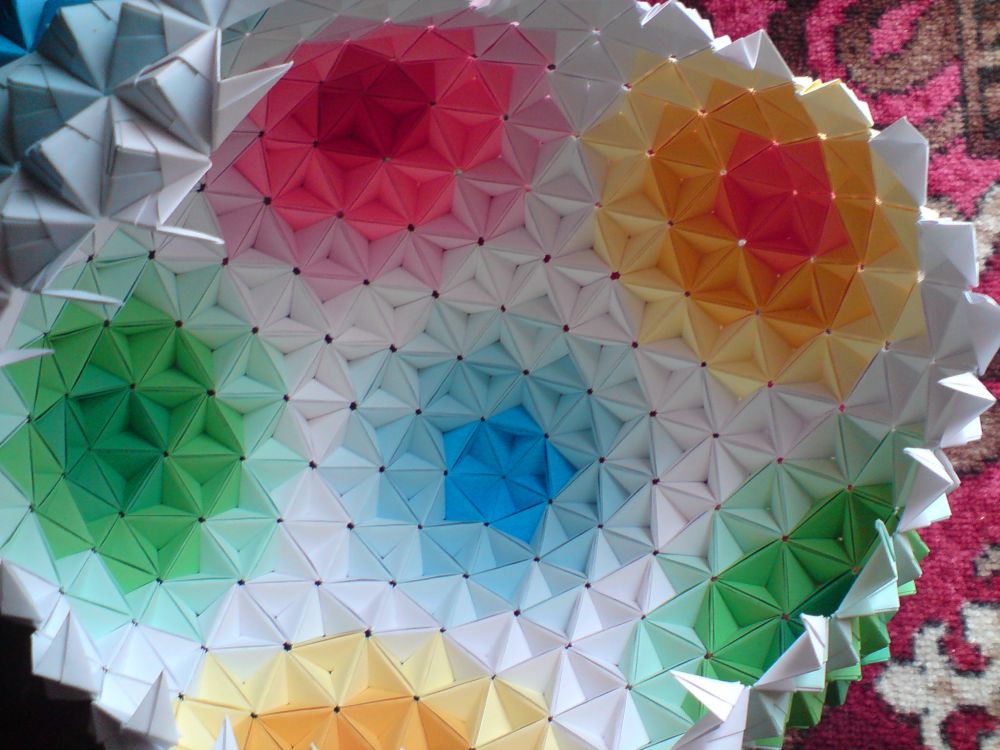
The cube is a simple example of a bipartite map. If we dangle a cube from one corner, we can color the bottom corner white and follow the bipartite coloring rules to color the other corners until we finish with a black corner at the top. Accordingly, in korgome weaving the basket described by this trivalent map, we should start at the bottom with a www point and make only www or mmm points until we end up at an mmm point at the top.


The cube has a bipartite map.


Being bipartite, this map admits a frequency-0 korgome weaving. In order to finish at a point-out, mmm vertex at the top corner of the cube, we can start at a point-in, www vertex at the bottom corner.


Puck weaving started with the aid of spring clamps. A completed www vertex is below, a completed mmm vertex is above. The plane can be woven with vertices of just these two types.

Another bipartite trivalent map is the (infinite) map of hexagons tessellating the plane.


The tessellation of the plane by hexagons is a bipartite, trivalent (infinite) map.

Monday, August 22, 2011

Straight twongs: unit ply-split braiding

Twongs don't have to be bent (it saves some trouble if they aren't.) Both 2-ply and 3-ply twongs can be made without the usual bends if they are to be used in a kagome weave pattern. (This familiar tessellation of hexagons and triangles is the medial of both the regular tessellation of triangles and of the regular tessellation of hexagons.)


The crossings at the vertices are 2-ply over 2-ply and belong to the technique of ply-split braiding.

The ply-split crossings are especially advantageous with twongs because they "lock" and cannot be undone by simple untwisting.

Here is a small sample of 2-ply, unit ply-split or UPS braiding in a kagome weave.


Wednesday, March 7, 2012

Weaving binary distortion isomers from accented undip words

If a flexeez basket is made of Y-shaped joins, its graph is trivalent. If furthermore, it does not contain self-loops, then its graph is a trivalent multigraph. Most trivalent multigraphs are hamiltonian, that is, they have a cycle of edges that visits every vertex without retracing any edge. If the basket is trivalent, hamiltonian, and has spherical topology (genus zero), then it can be represented by at least one undip word (usually many.) If it can be represented by an undip word, then, taking the "all-long" version of that basket as the primal isomer, all of its binary distortion isomers can be represented as an accented undip word in the following way.

Represent a flexeez played "long" by a prime ('), and one played "short" with a star (*). A convention that comes naturally to twog weaving (but is hardly necessary in weaving flexeez) is to consistently take the units added at a given vertex in a counterclockwise, right-to-left order. Notice that at a vertex described by an open letter, two units are added to the work; at a vertex described by a closed letter, one unit is added to the work. After each letter in the undip word, append primes and stars, one for each unit added at that vertex, taken in the counterclockwise, right-to-left order. The first and last letters are anomalous: the first letter adds three units to the work, the last letter adds none. A convenient solution is to append the extra prime or star (needed at the first letter) onto the last letter (where none is needed.) Then we gain the hard and fast rule that open letters have two accents, closed letters have one. (The weaver must look ahead at the accent on the last letter in order to orient the very first piece in the weaving.)

The color convention in the weaving shown in the following photographs is that pink is the first energy color, purple is the second; green is for photons.

Here we are weaving:

u'*n'*d'p*

A big help in weaving distortion isomers is observing the convention that long plays are played right-side-up, and short plays are played upside-down. With the flexeez brought in in the right order and flipped in the right way, rather less thinking is involved in getting it properly into the work.

Here is the work after the first letter, u'*:


Notice that we read ahead to the asterisk on the last letter, p*, to learn that the first flexeez is played short. Here is the work after the second letter, n'* :


After the third, d' :


After the fourth and final letter, p* :


And the completed binary distortion isomer, u'*n'*d'p* :


The following eight accented undip words suffice for all eight distortion isomers of the tetrahedron:

u''n''d'p'

u*'n''d'p'

u*'n''d*p'

u**n''d'p'

u**n*'d'p'

u**n'*d'p'

u**n''d*p'

u**n''d'p*

Thursday, May 16, 2013

2-phase corrugated kagome unit-weaver

This 2-phase unit weaver has less overlap than the one in the previous post. The baskets it makes are 4 plies thick.